 Barbie
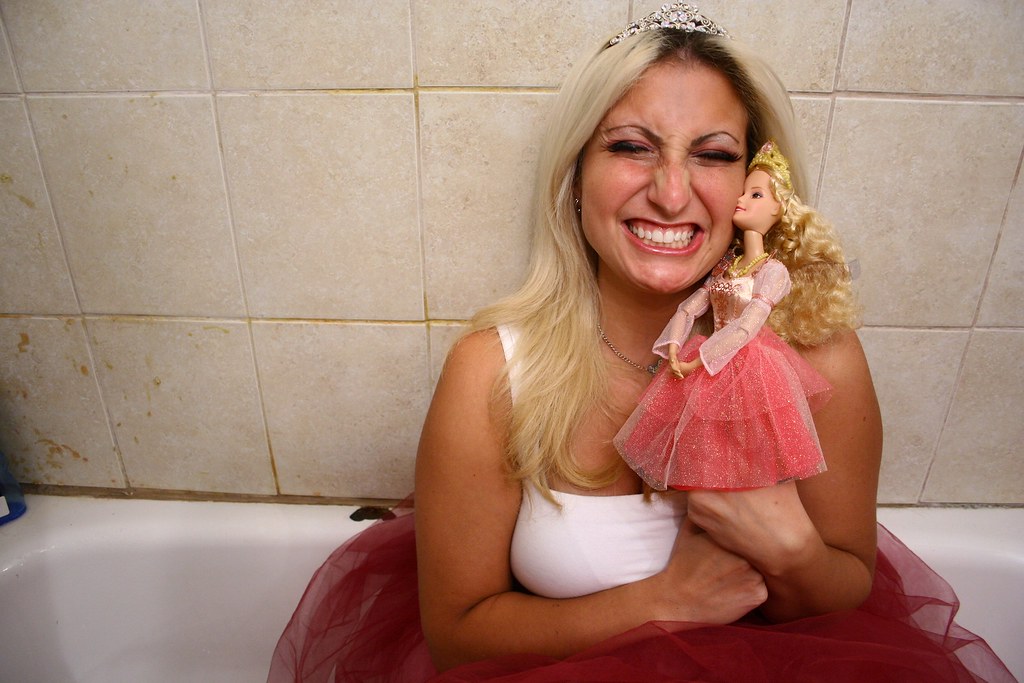
 is the most iconic, popular and controversial doll of all time. Approximately 3 barbies are sold every second of the day, bringing in $3.6 billion in revenue every year. Just about every North American girl has owned one at some point in their lives. At 50 years old, Barbie is still maintaining her banging, and completely unrealistic dimensions, which have (thankfully) been widened from the original 36-18-38, 5'9 stature.

Barbie's body has been under criticism ever since her creation. She instills an image of false womanhood in the eyes of little girls, which has even inspired eating disorders and low-self esteem. According to Robert Dobson's article in
The Sunday Times,
“These ultra-thin images not only lowered young girls’ body esteem but also decreased their satisfaction with their actual body size, making them desire a thinner body.”
Dr Margaret Ashwell, science consultant and former director of the British Nutrition Foundation, said: “These results are very important and show that children can be influenced at a very early age. We need to be aware of that and take the appropriate action.”
In 1965 the creation of "Slumber Party Barbie" hit the stores. She came with a book entitled "How to Lose Weight" that suggested, "Don't Eat." She even came with a cute scale that was stuck on 110lbs. Approximately 35lb lighter than any healthy woman would be at 5'9. Adorable! Right?
Even though Barbie has the "perfect" body that any 14 year old, prepubescent teenage

boy would swoon over, she's also been depicted in a variety of different ways other than her tall-blonde-decked-in-hot-pink self. She has had a wide array of powerful careers over the years. You can buy Doctor Barbie, Astronaut Barbie, Rockstar Barbie, PRESIDENT Barbie, and she has never been seen as a woman who has been pressured to marry or procreate. So why is Barbie an object of such feminist scorn? Shouldn't she also be regarded as an empowering play figure for young girls?
Carol Oakman, an Art professor at Williams University did an Interview with
The Economist about her extensive research on Barbie, and she believes Barbie is not seen as female empowering because,
"ultimately, it's the fact that people think a woman can't look like that, and be so obsessed with her appearance without being a bimbo... Barbie's origins in that time makes it hard for her to ever escape the thinking that formed her, which was less empowering for women."
As adults, it's easy for us to write off Barbie from a much more critical stand-point, but in the eyes of a young girl, Barbie encompasses a world of endless possibilities. Barbie can be used as a form of escapism and an outlet of creativity. Personally, I know when I was younger, I never looked at Barbie as a "hero" or "role model" hoping one day to grow torpedo breasts and dye my hair platinum blonde. Instead I used to chop off all her hair, draw little pictures to put around her house and constantly change her outfits. I admit, her unrealistic body is definitely problematic, but Mattel has been making the necessary changes. Barbie's body has since been redesigned to look more realistic, as well as more inclusive to different races of young girls.

 Imagine, after a long stressful day at work or school, you head over to the bus stop dying to sit down and breathe for a minute. Just as you sit, eager to rest your legs, you discover that the bench you're sitting on is actually hooked up to a SCALE that's displaying your weight to EVERY passerby in big, red, glowing numbers.




 Posts
Posts


